Why Professional Sod Installation Matters
A beautiful, healthy lawn doesn't start with the grass — it starts with what's underneath it. Professional sod installation from Sol Scapes gives you an instant lawn that's built to last, with proper soil preparation that most DIY installations skip entirely. The difference between sod that thrives for years and sod that fails within months almost always comes down to what happens before a single roll is laid.
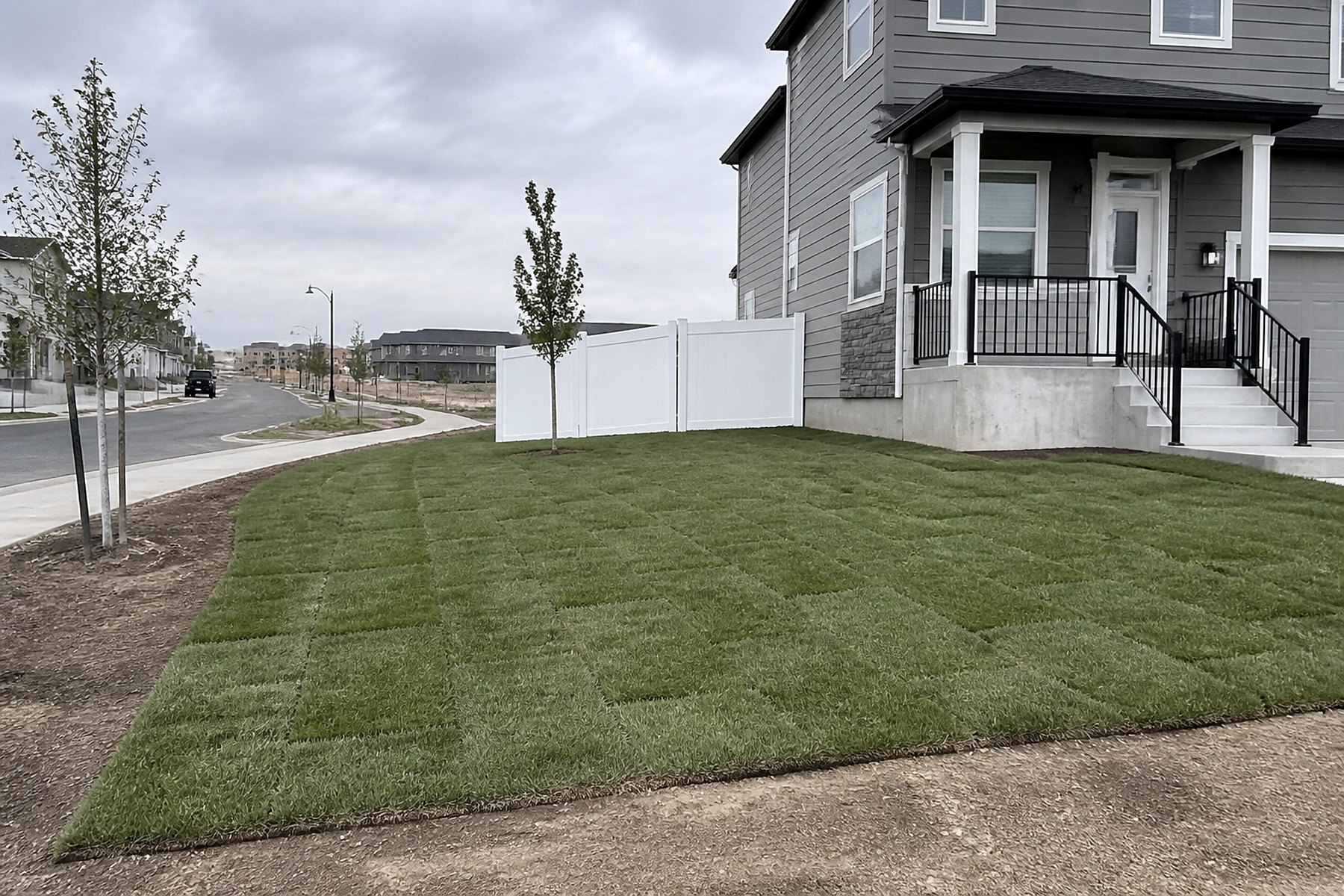
Soil preparation is the most critical step in any sod project. Utah's native soils range from heavy clay in the valley floors to rocky, alkaline substrates along the benches. Without proper grading, amendment, and compaction, sod sits on a surface that doesn't drain correctly, doesn't deliver nutrients efficiently, and doesn't allow roots to penetrate. The result is sod that yellows, develops fungus, separates at the seams, and dies — often within the first season.
Grading and drainage are equally important. Water needs to flow away from your home's foundation and distribute evenly across the lawn. Poor grading creates low spots that puddle and drown the grass, and high spots that dry out and die. Sol Scapes laser-levels every project to ensure consistent grade and proper drainage across the entire lawn area.
DIY sod installation is one of the most common homeowner projects we get called to fix. Homeowners lay sod directly over compacted construction fill, skip soil amendment, leave air gaps under the rolls, and don't roll or water properly. Within weeks, the sod shrinks, gaps appear between rolls, and patches start dying. Professional installation eliminates all of these issues from day one.
Our Sod Installation Process
Every Sol Scapes sod installation follows a detailed, multi-step process designed to give your new lawn the strongest possible start. Here's exactly what happens from the initial consultation through your first mow:
- Site evaluation — We assess your existing soil conditions, drainage patterns, sun exposure, and grade. We take soil samples when needed and identify any problem areas that need to be addressed before installation.
- Old lawn and weed removal — If you have existing grass, weeds, or ground cover, we remove it completely using sod cutters and mechanical removal. We ensure all old root systems, rocks, and debris are cleared so the new sod has a clean surface to bond with.
- Grading and leveling — Using a Harley rake and hand tools, we establish proper grade across the entire lawn area. We ensure a minimum 2% slope away from structures for drainage, eliminate low spots, and create a smooth, consistent surface.
- Soil amendment — Utah's native soil typically needs help. We till in organic compost, topsoil, and soil conditioners to improve structure, drainage, and nutrient availability. For heavy clay soils, we add gypsum to break up compaction. The goal is a loose, nutrient-rich top 4–6 inches that roots can penetrate easily.
- Sod delivery and laying — We coordinate same-day delivery of fresh-cut sod from local Utah farms. Sod is laid immediately to prevent drying, starting along the longest straight edge and working outward. Rolls are staggered in a brick-like pattern with tight seams — no gaps, no overlaps.
- Rolling — After all sod is placed, we use a weighted lawn roller to press the sod firmly into the soil below. This eliminates air pockets, ensures root-to-soil contact across the entire surface, and helps the sod establish quickly.
- Initial watering schedule — We set up your irrigation system (or provide a manual watering plan) for the critical first two weeks. Your new sod needs consistent moisture immediately after installation, and we make sure you have a clear schedule to follow.
Sod Types for Utah
Choosing the right sod variety for Utah's climate is essential for long-term lawn health. Sol Scapes works with local sod farms to source varieties that are proven performers in our region:
- Kentucky Bluegrass — The most popular sod variety in Utah and for good reason. Kentucky Bluegrass thrives in Utah's climate with proper watering, produces a dense, dark green lawn with a soft texture, and self-repairs through rhizome spread. It handles full sun to moderate shade and recovers well from winter dormancy. Most of our residential installations use premium KBG blends.
- Fescue blends — For yards with significant shade from mature trees or structures, tall fescue and fine fescue blends offer better shade tolerance than Bluegrass. Fescue also has deeper root systems that improve drought tolerance. We often recommend fescue for north-facing yards and heavily shaded side yards.
- Drought-tolerant varieties — For homeowners looking to reduce water usage without going to artificial turf, drought-tolerant sod blends combine fescue and Bluegrass varieties selected for lower water requirements. These blends need 20–30% less water than standard KBG while still providing a green, functional lawn.
When to Lay Sod in Utah
Timing your sod installation correctly makes a significant difference in how quickly and successfully your new lawn establishes. Here's what you need to know about sod timing in Utah:
Spring (April – early June) is the ideal window. Soil temperatures are warming, natural rainfall supplements irrigation, and the grass has an entire growing season ahead to establish deep roots before winter. We schedule the majority of our residential sod projects during this window.
Fall (September – mid-October) is the second-best window. Cooler temperatures reduce water demand, and the grass focuses energy on root growth rather than top growth. Fall-installed sod enters winter with an established root system and comes back strong the following spring.
Mid-summer (July – August) installations are possible but require significantly more water and attention. Utah's 90–100°F summer heat stresses new sod heavily. If you need summer installation, be prepared for higher water bills and more frequent irrigation cycles during establishment.
Winter dormant sod can be installed in late fall through early winter. The sod won't actively grow, but it will slowly root over the cold months and green up in spring. This is a good option if you're finishing a construction project and want ground cover in place before spring.
Sod vs. Seed: Pros and Cons for Utah
Utah homeowners often weigh sod against seeding. Both have their place, and the right choice depends on your budget, timeline, and property conditions:
- Sod gives you an instant lawn — Walk on it within 2–3 weeks, versus 6–8 weeks or longer for seed to fill in. For curb appeal, erosion control, and immediate use, sod wins.
- Seed is cheaper upfront — Seeding costs less in materials, but requires more prep passes, hydroseeding or straw cover, and a much longer establishment period with significantly more watering.
- Sod prevents erosion immediately — On slopes, near foundations, and in high-traffic areas, sod provides instant ground cover. Seed on slopes often washes away before germinating.
- Seed offers more variety selection — You can custom-blend seed mixes for specific conditions. Sod farms grow a limited number of cultivars.
- Sod is more reliable — Seed germination is affected by temperature, moisture, birds, wind, and weed competition. Sod is already mature grass that's been growing for 12–18 months on a professional farm.
Sod Maintenance: The First 30 Days
How you care for your new sod in the first month determines whether it thrives or struggles. Here's the maintenance schedule we provide every Sol Scapes customer:
Days 1–14 (establishment phase): Water 2–3 times per day to keep the soil beneath the sod consistently moist. Each session should run 10–15 minutes per zone. The goal is moist soil — not standing water. Avoid walking on the sod during this period. Check for dry spots, especially along edges, seams, and south-facing areas that dry faster.
Days 15–21 (transition phase): Reduce watering to once daily, increasing the duration to 20–30 minutes per zone. This encourages roots to grow deeper as the surface dries slightly between waterings. You can gently tug a corner of sod to check root progress — if it resists, roots are anchoring.
Days 22–30 (maturation phase): Transition to a deep-watering schedule of 2–3 times per week, running 30–45 minutes per zone. This is the long-term irrigation approach that promotes a deep, drought-resistant root system. Your first mow should happen around day 14–21, when the grass reaches 3–3.5 inches tall. Set your mower to the highest setting and never remove more than one-third of the blade height.
Fertilization: Apply a starter fertilizer at installation (we include this in our process). Wait 4–6 weeks before the next application, then follow a seasonal fertilization schedule — typically 4 applications per year for Utah lawns.