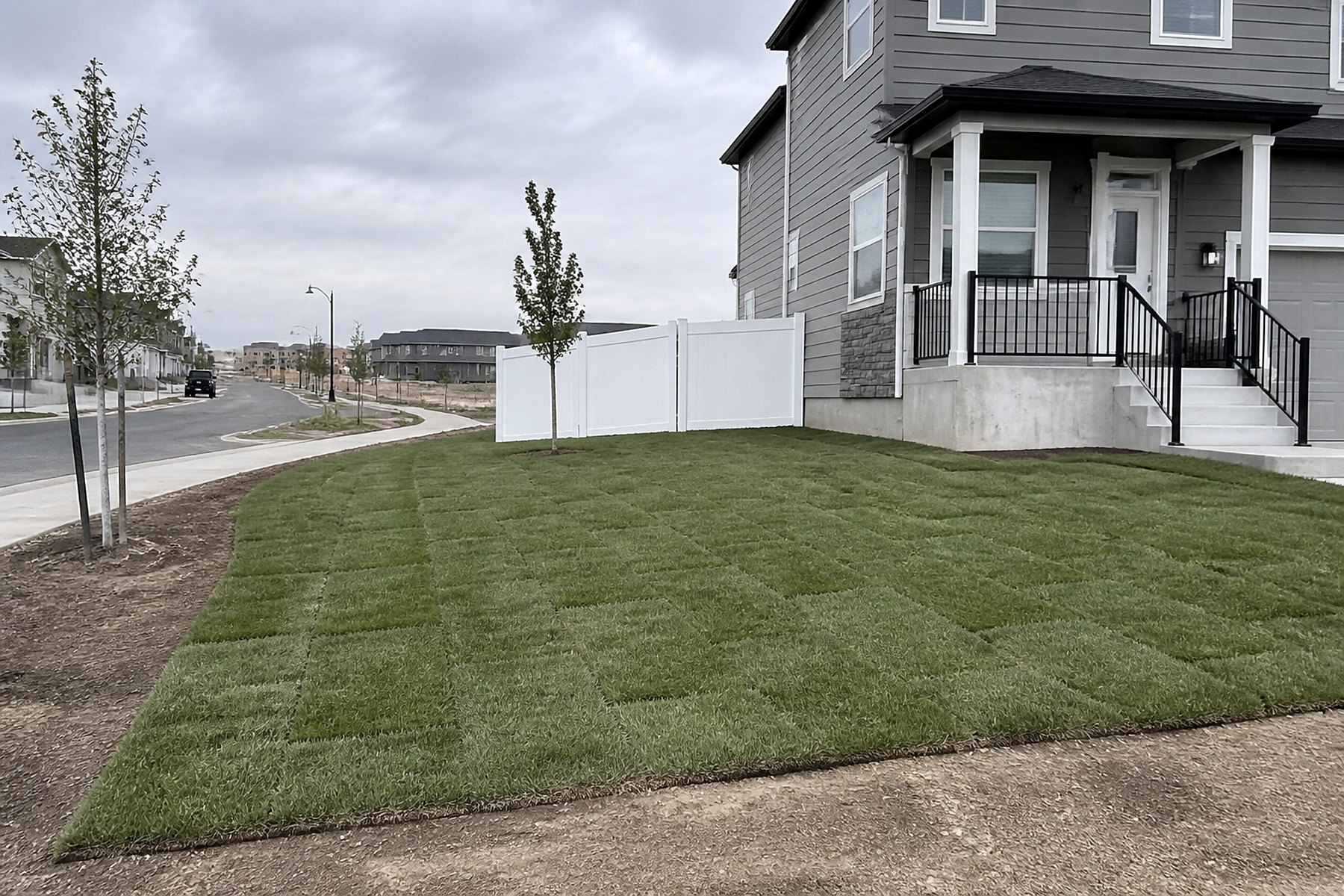
Utah is building thousands of new homes every year. Davis County, Salt Lake County, and the south end of the valley from Draper to Lehi are seeing entire neighborhoods go up in a matter of months. Builders finish the house, hand you the keys, and leave you staring at a dirt yard with a sprinkler stub poking out of the ground. If you live in an HOA community — and most new construction in Utah does — you've got 12 months to get your landscaping installed before the fines start rolling in.
That sounds like pressure, but it's actually an opportunity. A blank canvas is the best possible starting point for new construction landscaping in Utah. No old sod to rip out, no crumbling concrete to demo, no overgrown trees to work around. You get to design the yard you actually want from scratch. Here's how to make the most of it.
Start With a Plan Before You Start Spending
The biggest mistake new construction homeowners make is reacting instead of planning. The HOA deadline creates urgency, so they throw sod down, plant a few bushes, and call it done. Six months later they realize the sod is dying in the shady corner, there's nowhere to put a patio, and they've already spent $8,000 on a layout that doesn't work for how they actually live.
Before you hire anyone or buy a single pallet of sod, walk your empty yard and think about zones. Front yard curb appeal is one zone. Backyard entertaining — a patio with seating, a grill area — is another. Kids' play space needs flat, soft ground. If you have dogs, they need a durable area that won't turn into a mud pit. Garden beds, storage, a fire pit area — each one deserves a defined space in the plan.
Sketch it out on paper or use your phone to take photos and mark them up. You don't need an architect-level drawing. You need a basic map of what goes where, so every dollar you spend moves in the same direction. A professional landscape design takes this further with grading plans, irrigation layouts, and material selections — and it pays for itself by eliminating costly changes mid-project.
Front Yard — First Impressions Matter
Artificial turf is the number one choice for new construction front yards in Utah right now, and it's not even close. Zero maintenance, green 365 days a year, no mowing, no fertilizing, no watering. In a state where water costs keep climbing and drought restrictions tighten every summer, turf eliminates the biggest headache of front yard ownership.
Even better — artificial turf qualifies for water conservation rebates from most Utah water districts. Depending on your provider and square footage, you could get $1,000–$3,000+ back on your turf installation. That's real money off a project you were already planning.
Pair the turf with concrete walkways leading to your front door, decorative rock beds with clean edging, and a handful of drought-tolerant plants like Russian sage, Karl Foerster grass, or Utah-native serviceberry. The result is a front yard that looks professionally maintained every single day without any of the maintenance. Your neighbors with Kentucky bluegrass will be jealous in August when their lawn is brown and yours looks like a golf course.
For homeowners who prefer natural grass in the front, sod is still a solid option — just go in with eyes open about the watering, mowing, and fertilizing commitment. Our sod vs. seed vs. turf comparison breaks down the real costs and time investment for each option.
Backyard — Build for How You Live
The backyard is where new construction landscaping gets exciting. This is your space — no HOA architectural committee is going to dictate what happens back here (beyond basic fence and structure rules). Design it around how your family actually spends time outside.
A paver patio is the foundation of most backyard designs we install. Pavers give you a flat, durable surface for a dining table, outdoor furniture, a grill station, or all three. Expect to budget $20–$32 per square foot installed, depending on paver style and pattern complexity. A 300-square-foot patio — enough for a 6-person dining set and a couple of lounge chairs — runs $6,000–$9,600. It's one of the highest-ROI investments you can make in outdoor living.
Sod is the right call for the open lawn area — the space where kids run, dogs play, and you set up the slip-and-slide in July. New construction is actually the ideal time to install sod because the soil is already exposed and (usually) roughly graded by the builder. We fine-grade, amend the soil, install irrigation, and lay the sod so it establishes fast.
Add a fire pit area for evening hangouts — even a simple gravel pad with a portable fire pit creates a destination in the yard that gets used from April through October. For the full outdoor living experience, a built-in fire pit with a paver surround and seating wall turns your backyard into a space you'll use more than your living room during Utah's long summer evenings.
If your lot has any slope — and it probably does, especially in new construction on the Wasatch Front benches from Bountiful to Draper — you'll need a retaining wall to create usable flat space. More on that below.
Irrigation — Do It Right the First Time
New construction is the absolute best time to install a proper irrigation system. The ground is already torn up. There's no existing landscaping to work around. Trenching is simple when you're working in bare dirt rather than cutting through established lawn and plant beds.
A well-designed irrigation system includes smart controllers that adjust watering based on weather and soil moisture — no more guessing or setting a timer and hoping for the best. Drip zones for plant beds deliver water directly to roots with almost zero waste. Spray zones for lawn areas provide even coverage that keeps sod healthy through July and August when Utah's heat is relentless.
Here's the critical point: do not install sod without irrigation. Sod needs consistent, deep watering to establish roots — especially during its first summer. In Utah's climate, where afternoon temperatures regularly hit 95–100°F and humidity sits in the single digits, unirrigated sod will be dead within two to three weeks. We've seen homeowners waste thousands of dollars on sod that failed because they planned to "just use a hose" for the first season. It doesn't work.
If you're phasing your landscaping, install the full irrigation system in phase one even if you're only planting the front yard initially. Running pipe and wire through bare dirt now costs a fraction of what it'll cost to trench through a finished backyard later.
Retaining Walls and Grading
New construction lots along the Wasatch Front almost always have grade changes from the builder's rough grading. The builder cuts into the hillside to create a flat building pad, then pushes the excavated dirt to the edges of the lot. The result is a flat area where the house sits, surrounded by slopes on one or more sides that need to be addressed.
Boulder retaining walls ($40–$50 per square foot) are the most popular choice for grade changes under 4 feet. They use natural Utah limestone or sandstone, drain well through the gaps between stones, and blend into the landscape. For larger grade changes or clean modern lines, engineered block walls ($90–$110 per square foot) provide the structural capacity to handle significant height with geogrid reinforcement. Our retaining wall cost guide breaks down both options in detail.
Just as important as the wall itself is addressing drainage before it becomes a problem. Water running downhill toward your foundation is the fastest way to end up with a wet basement. Proper grading directs surface water away from the house, and a well-designed retaining wall system includes drain tile, gravel backfill, and filter fabric to manage subsurface water. Fixing a drainage problem after the yard is finished costs three to five times more than doing it right during the initial landscaping install.
Permanent Lighting
Permanent outdoor lighting is one of those features that's ten times easier to install during new construction landscaping than it is to retrofit later. When the yard is bare dirt, running low-voltage wire to every light location takes a fraction of the time and cost compared to trenching through a finished lawn and established plant beds.
LED path lights along walkways and driveways improve safety and curb appeal. Uplighting on trees and architectural features adds dramatic effect at night. Patio and deck lighting extends your outdoor living season well into the evening — which matters in Utah, where summer sunsets are gorgeous but the temperature only gets comfortable after 7 PM.
The best part about installing lighting during your initial landscaping project is that all the wiring is buried and hidden before anything else goes in. No exposed conduit, no awkward surface-mounted fixtures, no tearing up the new paver patio to run a wire you forgot about.
Budget Planning for New Construction Landscaping
Every new construction landscaping project is different, but here are the ranges we typically see along the Wasatch Front:
- Front yard only: $5,000–$15,000. This covers turf or sod, walkway, rock beds, a few plants, and basic irrigation for the front. This is the minimum to satisfy most HOA requirements and create solid curb appeal.
- Full front and backyard: $15,000–$40,000+. Adds a paver patio, sod or turf in the back, retaining walls if needed, full irrigation, fire pit, and lighting. The range is wide because backyard complexity varies enormously — a flat 1,500-square-foot lot is a very different project than a sloped half-acre with 6-foot grade changes.
If the full project exceeds your current budget, phase it. Front yard first — that satisfies the HOA deadline and establishes curb appeal. Backyard in the next season. This is extremely common and there's no shame in it. The key is to design the full plan upfront even if you're building it in stages. That way the irrigation runs where it needs to, the grading accounts for future features, and phase two connects seamlessly to phase one without rework.
Get Your Free Landscaping Quote
If you just closed on a new construction home in Davis County, Salt Lake County, or anywhere along the Wasatch Front, we'd love to walk your lot and help you plan. We'll assess your grading, discuss your priorities, and put together a detailed proposal with real numbers — no pressure, no generic estimates.
We handle everything from artificial turf and sod to pavers, retaining walls, irrigation, and permanent lighting — all under one crew, one contract, one timeline.
Request your free new construction landscaping quote or call us at (801) 391-0906. Let's turn that dirt yard into something worth coming home to.