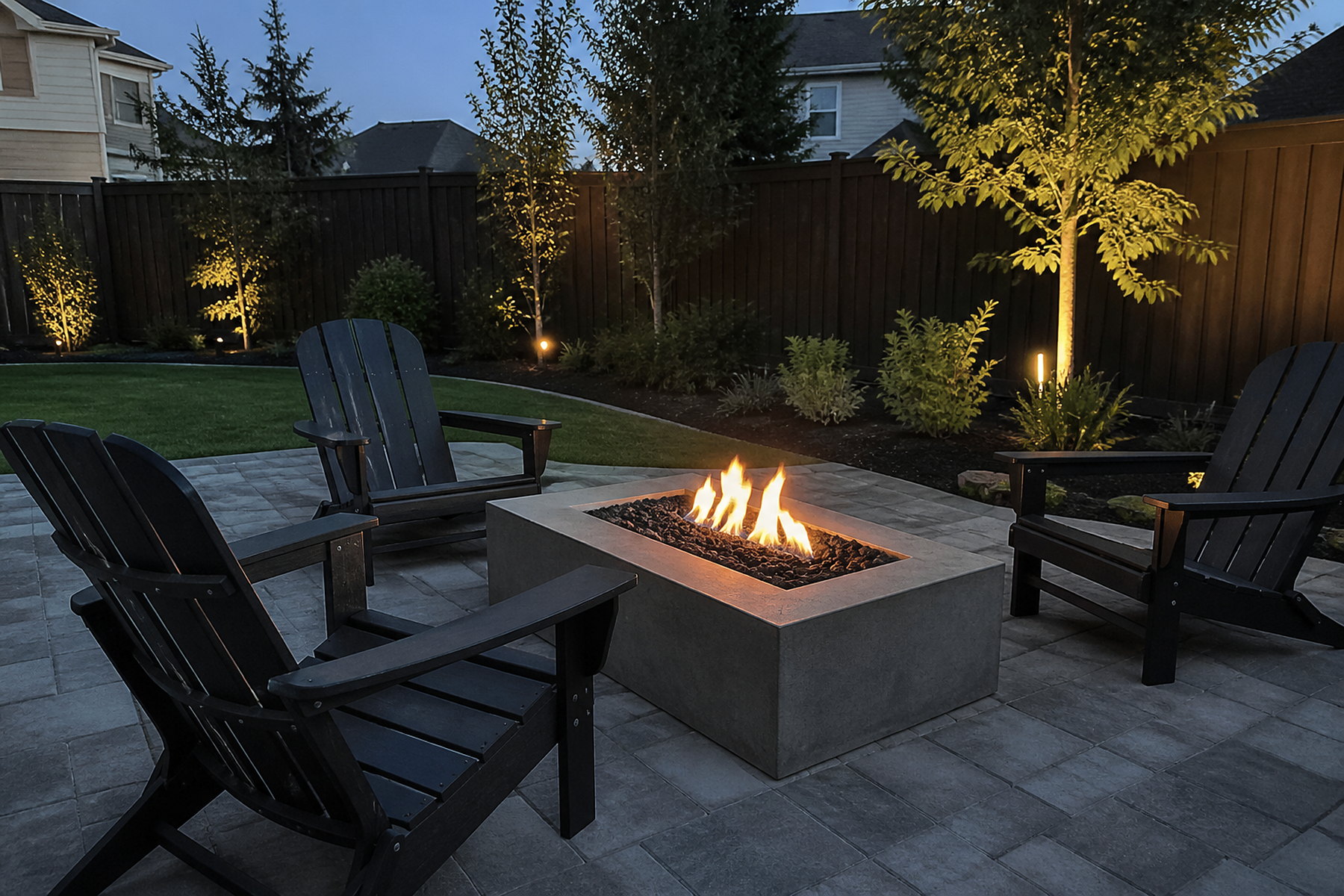
It's the most common question we hear from Utah homeowners: "Should I go with concrete or pavers?" Both are excellent materials with proven track records, and both can look great when installed properly. But they perform very differently over time — especially in Utah's climate, where ground heave, freeze-thaw cycling, and intense UV exposure push outdoor surfaces to their limits.
We install both concrete and pavers across Davis, Salt Lake, and Utah Counties, so we don't have a financial bias toward one over the other. This is a straightforward comparison based on what we've seen perform best on real Utah properties over years of installations.
Side-by-Side Comparison
Here's how concrete and pavers stack up across the factors that matter most:
Cost
Concrete: $12–$18 per square foot. Standard broom-finished concrete falls at the low end. Stamped and colored decorative concrete reaches the higher range. Concrete is consistently the more affordable upfront option.
Pavers: $20–$32 per square foot. Standard interlocking concrete pavers start around $20/sq ft, while premium and tumbled pavers reach $32/sq ft. The price reflects material cost plus the more labor-intensive installation process.
Durability and Lifespan
Concrete: 25–30 years. Poured concrete is strong and handles loads well, but it's rigid. When the ground moves — and in Utah, it will — concrete doesn't flex. It cracks. And cracks in a monolithic slab are permanent. You can fill them, but you can't make them disappear.
Pavers: 25–50+ years. Pavers are individual units set on a flexible base. When the ground shifts, pavers move with it instead of cracking. Individual pavers may settle or shift slightly over time, but the system as a whole accommodates ground movement far better than rigid concrete. Well-installed paver patios and driveways regularly last 40–50 years with basic maintenance.
Maintenance
Concrete: Low maintenance for the first 5–10 years. Pressure wash annually, reseal every 2–3 years if stamped. But once cracks appear, maintenance becomes reactive — you're patching and filling rather than preventing.
Pavers: Slightly more regular maintenance upfront — occasional polymeric sand top-ups (every 3–5 years), weed prevention in joints, and periodic sweeping. But the trade-off is that you'll likely never face the kind of catastrophic damage that cracks represent in concrete.
Repair
Concrete: This is concrete's biggest weakness. When a section cracks or settles, you can't seamlessly repair it. You either live with patched cracks (which are always visible) or tear out and repour the damaged section — which rarely matches the existing slab in color or texture. Many homeowners end up replacing the entire surface.
Pavers: This is pavers' biggest advantage. A damaged or stained paver can be lifted out and replaced with an identical unit in under an hour. A settled section can be lifted, the base re-leveled, and the pavers reset — good as new. This is also critical for utility work: if you need to access pipes or wiring under a paver surface, you can remove and reinstall pavers without destroying your investment.
Aesthetics and Design
Concrete: Basic concrete is utilitarian. Stamped concrete adds texture and pattern (mimicking stone, brick, or slate), and integral coloring adds warmth. But the options are fundamentally limited compared to pavers — you're working with one continuous surface.
Pavers: Nearly unlimited design options. Multiple colors, textures, shapes, and sizes can be combined to create borders, patterns, inlays, and multi-zone layouts. You can mix materials (pavers with turf strips between rows, contrasting border bands) for designs that concrete simply can't replicate.
Resale Value
Concrete: Well-maintained concrete adds value but is seen as a standard finish. Cracked concrete actively detracts from curb appeal.
Pavers: Consistently rated higher in real estate appraisals. Paver driveways and patios signal a premium property upgrade and hold their appearance better over time, which matters when buyers are comparing properties.
Utah-Specific Considerations
National comparisons between concrete and pavers miss critical factors that are specific to Utah's climate and soil conditions. Here's what makes this decision different along the Wasatch Front:
Clay Soil and Ground Heave
Much of Davis, Salt Lake, and Utah Counties sit on expansive clay soil. Clay soil absorbs water and swells in spring, then dries and contracts in summer. This seasonal expansion and contraction creates ground movement that's brutal on rigid surfaces. We see more cracked concrete in Utah than almost any other state we've studied, and clay soil is a primary driver.
Pavers ride this movement because each unit is independent. A paver patio on properly compacted base rock over clay soil will shift slightly with the seasons but return to level. A concrete slab on the same soil will develop stress fractures that worsen year after year.
Freeze-Thaw Cycles
The Wasatch Front experiences 50–80 freeze-thaw cycles per year — one of the highest rates in the western United States. Water penetrates concrete surfaces and pores, freezes and expands, thaws and contracts. Over hundreds of cycles, this gradually breaks down concrete from within. Surface spalling (the top layer flaking off) is common on Utah driveways after 8–12 years.
Pavers handle freeze-thaw cycling fundamentally differently. The joints between pavers allow for expansion and contraction. Water drains through the joint system rather than pooling on a flat surface. Individual pavers are denser than poured concrete (manufactured at 8,000+ PSI vs. 3,500–4,500 PSI for typical poured residential concrete) and resist freeze-thaw deterioration far better at the material level.
UV Exposure and Color Fading
At Utah's elevation (4,200–6,000+ feet along the Wasatch Front), UV radiation is 20–25% stronger than at sea level. Stamped and colored concrete fades noticeably within 3–5 years without regular resealing. Premium pavers use through-body coloring that resists fading significantly better, maintaining their appearance for decades rather than years.
When to Choose Concrete
Concrete is the right choice when:
- Budget is the primary constraint. If you need to cover a large area at the lowest cost per square foot, concrete delivers. A 500 sq ft concrete patio at $12/sq ft ($6,000) vs. pavers at $22/sq ft ($11,000) is a meaningful difference.
- You want a simple, clean design. Broom-finished or lightly stamped concrete gives a clean, modern look for walkways, pool decks, and minimalist patios.
- Large, flat driveways. For a standard flat driveway with no slopes or drainage challenges, reinforced concrete with proper control joints performs well and is the most economical option.
- Modern or minimalist aesthetic. Smooth gray concrete aligns with contemporary architectural styles where a monolithic surface is the design intent.
- Speed matters. Concrete installation is faster than pavers. A driveway that takes 3–5 days with pavers can be poured in 1–2 days (plus cure time).
When to Choose Pavers
Pavers are the right choice when:
- You're thinking long-term. If you plan to stay in your home for 10+ years, pavers' longevity and repairability make them the better financial investment despite higher upfront cost.
- You want a high-end look. For outdoor living spaces, entertaining areas, and front walkways where aesthetics matter, pavers deliver a level of design sophistication concrete can't match.
- Your property has slopes or drainage challenges. Pavers on a properly graded base drain better than flat concrete, and permeable paver options allow water to pass directly through the surface.
- You want design flexibility. Multiple colors, patterns, borders, and material combinations let you create a truly custom outdoor space.
- Your soil is clay-heavy. If you're in an area with known expansive clay soil (common throughout the Salt Lake Valley), pavers' flexibility provides meaningful insurance against cracking.
- Future access to underground utilities is likely. Pavers can be removed and reinstalled. Concrete must be demolished and repoured.
Can You Combine Both?
Absolutely — and it's a strategy we recommend often. A concrete driveway (where budget efficiency matters most) paired with a paver patio and walkway (where aesthetics matter most) gives you the best of both worlds. We also install paver borders around concrete pads, creating a finished, high-end look at a blended price point.
Get a Real Comparison for Your Project
Every property is different, and the right material depends on your specific conditions, design goals, and budget. We provide free on-site consultations where we assess your property, discuss both options, and provide detailed quotes so you can make an informed decision with real numbers — not guesses.
Request your free quote or call us at (801) 391-0906. We serve homeowners throughout Davis, Salt Lake, and Utah Counties.