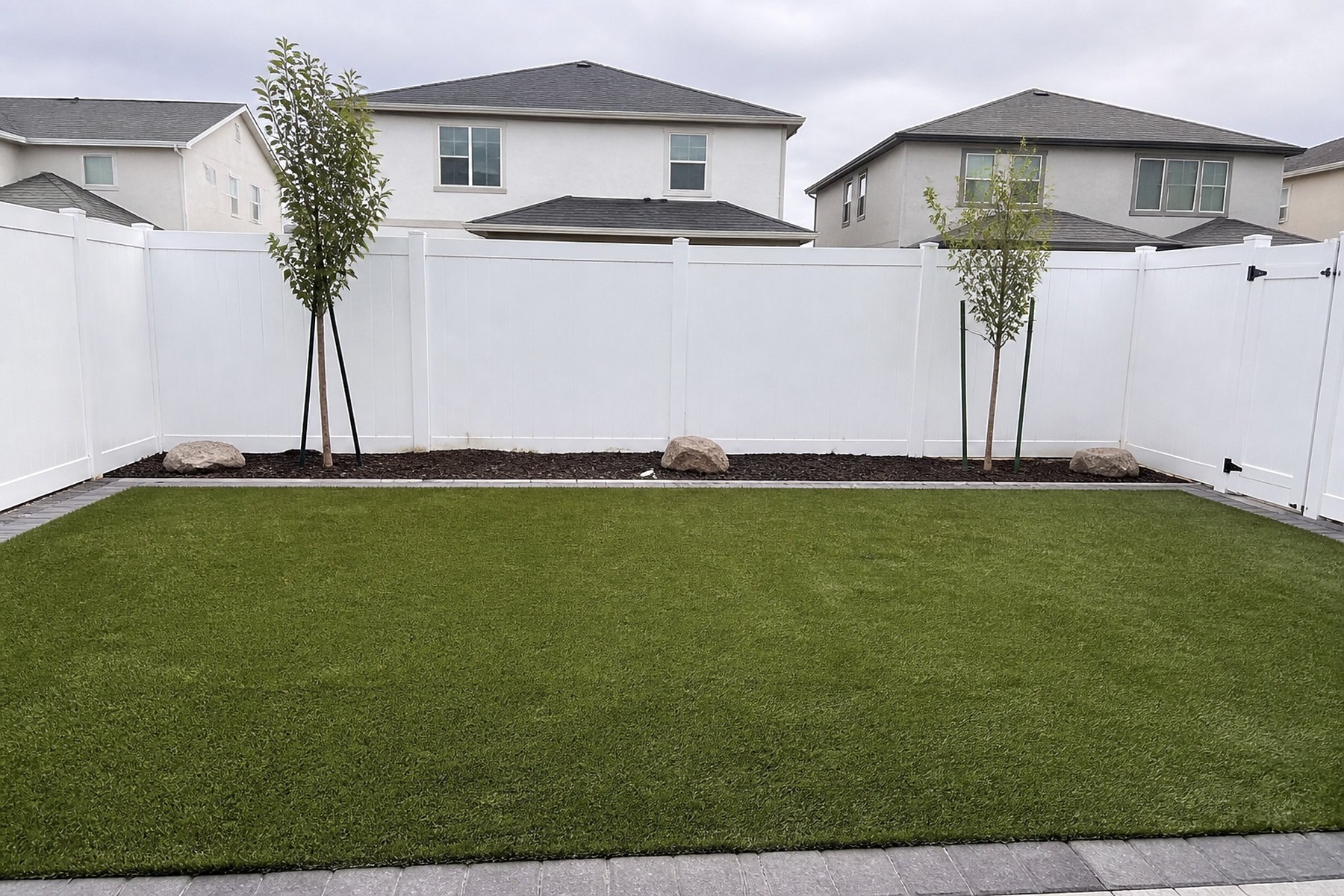
If you have dogs and a natural grass lawn in Utah, you already know the cycle: mud tracked through the house every spring, dead brown patches from urine by midsummer, craters dug along the fence line, and a yard that never quite recovers no matter how much time and money you throw at it. More Utah dog owners are switching to artificial turf every year — and once you understand what pet-specific turf actually offers, it's easy to see why.
But not all artificial turf is built the same. What works for a front yard showpiece won't necessarily hold up in a backyard with two German Shepherds. Pet turf is its own category, engineered specifically for drainage, durability, and odor control. Here's everything you need to know before you invest in artificial turf for your dog's yard.
Why Dog Owners Love Artificial Turf
The appeal is simple: a yard that looks great year-round without fighting your dogs for it. Here's what changes when you make the switch:
- No mud tracked into the house. Utah springs are brutal — snowmelt and rain turn natural yards into mud pits from March through May. With turf, your dogs come inside with clean paws every time.
- No brown spots from urine. Dog urine kills natural grass. It doesn't matter how much you water or treat it — if your dog has a favorite spot, that patch is dead. Artificial turf doesn't react to urine. It drains straight through and the blades look the same as day one.
- No digging damage. Dogs dig. It's what they do. Properly installed artificial turf is anchored into a compacted base that eliminates the soft soil dogs love to excavate. The turf itself is tough enough that even persistent diggers can't tear through it.
- No pesticide or fertilizer exposure. Maintaining a natural lawn in Utah means applying herbicides, fertilizers, and grub treatments several times a year. Those chemicals sit on the grass your dog rolls in, chews on, and walks through barefoot. Artificial turf eliminates that exposure entirely.
- Easy cleanup. Solid waste picks up cleanly off the turf surface. Liquid waste drains through the backing. A quick hose-down is all it takes to keep things fresh — no scrubbing, no deep cleaning, no surprises when you walk outside barefoot.
What Makes Pet Turf Different
When we say "pet turf," we're not talking about standard landscape turf with a marketing label slapped on it. Pet-specific artificial turf is engineered differently in four key areas:
Shorter pile height. Standard landscape turf typically has a pile height of 1.75 inches or more — that lush, tall-blade look that mimics a well-kept lawn. Pet turf runs shorter, usually 1.25 to 1.5 inches. Why? Shorter blades don't trap waste, are easier to rinse clean, dry faster after washing, and hold up better under heavy foot traffic. Your dog doesn't care about blade length. They care about a surface that's comfortable and consistent.
Enhanced drainage backing. This is the biggest structural difference. Standard turf backing drains around 20–25 inches per hour, which is fine for rainwater. Pet turf uses a perforated or flow-through backing system designed to handle a minimum of 30 inches per hour. That's critical when you have dogs urinating on the same surface multiple times per day. Liquid needs to pass through the turf immediately — no pooling, no sitting on the surface.
Antimicrobial infill. Standard turf uses silica sand as infill. Pet turf installations use specialized infill materials like Zeolite or BioFill that actively neutralize ammonia and inhibit bacterial growth. This is what prevents the odor buildup that gives pet turf a bad reputation when it's installed incorrectly. The infill is doing real chemical work — not just sitting there as ballast.
Higher face weight for durability. Dogs are hard on surfaces. They run the same paths along fence lines, sprint in tight circles, and stop on a dime. Pet turf uses a heavier face weight — the density of fibers per square foot — to withstand that repetitive, concentrated traffic without matting down or showing wear patterns. We recommend a minimum of 70 oz face weight for any yard with dogs.
Drainage Is the #1 Priority
If there's one thing that separates a successful pet turf installation from a failed one, it's drainage. And in Utah, drainage requires real engineering — not shortcuts.
Utah's native soil is predominantly clay, especially along the Wasatch Front from Bountiful through Layton and up into Kaysville. Clay soil has terrible natural drainage. Water sits on it. Urine sits on it. And when liquid sits under your turf, you get exactly the odor problems that make people say "artificial turf smells bad with dogs." It doesn't — but bad installations do.
A proper pet turf installation requires a fully engineered base: excavation of native soil, a layer of compacted drainage rock (typically 3–4 inches of road base topped with decomposed granite or crusher fines), and turf with perforated backing that allows liquid to flow through and disperse into the rock layer below. The base acts as a reservoir that distributes moisture laterally and allows it to percolate into the ground over time.
This is the primary reason DIY pet turf installations fail. Homeowners lay turf directly over existing soil, or over an insufficient base, and within a few months the drainage can't keep up with daily use. The result is standing moisture, bacterial growth, and odor. By the time they call us to fix it, the entire installation needs to be torn out and rebuilt from scratch.
If you're getting quotes for pet turf, ask specifically about the drainage system. If a company can't explain their base preparation in detail, move on. For more on what professional installation involves and how long it lasts, read our guide on artificial turf lifespan in Utah.
Dealing with Odor
Odor control is the number-one concern dog owners bring up when they ask about artificial turf — and it's a legitimate question. Here's how it's handled when the installation is done right:
Zeolite infill is the industry standard for pet applications. Zeolite is a naturally occurring mineral that absorbs and neutralizes ammonia on contact. When urine passes through the turf blades and hits the Zeolite infill layer, the ammonia is chemically bound and neutralized before it can produce odor. Zeolite is non-toxic, safe for pets, and lasts for years before needing a top-up.
BioFill is an alternative antimicrobial infill made from organic materials with built-in odor-neutralizing properties. It's lighter than Zeolite and works well in combination with enzyme treatments. Some pet owners prefer it for its natural composition.
Monthly enzyme rinse. Even with antimicrobial infill, a monthly application of a turf-specific enzyme cleaner breaks down any residual organic material in the backing and base layer. Think of it like a deep clean — the infill handles day-to-day neutralization, and the enzyme rinse handles the accumulated buildup.
Weekly hose-downs. In high-use areas — wherever your dog goes most frequently — a weekly rinse with a garden hose flushes urine through the drainage system before it has a chance to concentrate. This takes five minutes and makes a significant difference, especially during Utah's hot summer months when evaporation can concentrate odor-causing compounds.
When drainage, infill, and basic maintenance work together, pet turf stays odor-free. The problems only start when one of those three elements is missing — and drainage is usually the culprit.
How Much Does Pet Turf Cost in Utah?
Pet turf pricing falls in the same general range as standard artificial turf installation in Utah: $10–$14 per square foot installed. The base preparation, labor, and turf material are comparable. Where the price differs is in infill and drainage upgrades.
- Antimicrobial infill upgrade (Zeolite or BioFill): Adds $1–$2 per square foot over standard silica sand.
- Enhanced drainage backing: Typically included in pet-specific turf products at no additional cost.
For a typical 400 square foot dog run or dedicated pet area, you're looking at $4,000–$6,400 for a full professional installation with antimicrobial infill and engineered drainage.
Here's the part that changes the math significantly: Utah's water rebate programs offer up to $3 per square foot for converting natural grass to artificial turf. On a 400 sq ft project, that's up to $1,200 back — bringing your effective cost as low as $2,800. For full details on available rebate programs and how to apply, read our Utah water rebates guide.
Common Pet Turf Applications
Dog owners use artificial turf in a variety of configurations depending on their yard layout, dog count, and how their pets use the space:
Full backyard conversion. The most popular option. Replace the entire backyard with pet-friendly turf so your dogs have full run of a clean, mud-free space. This works especially well for families where the backyard serves double duty as a play area for kids and dogs.
Dedicated dog run or kennel area. If you want to keep your dogs in a specific zone — along a side yard, behind the garage, or in a fenced section of the backyard — a dedicated dog run with pet turf gives them a designated space that's easy to maintain. These smaller installations are budget-friendly and contain the wear to one area.
Side yard pet zone. The narrow side yard that never grows grass well anyway is a natural fit for pet turf. It's often the area dogs use most because it connects the front and back yards. Converting it to turf eliminates the mud path that forms along the house.
Indoor/outdoor transition areas. Turf installed along the back door threshold, patio edge, or deck step-down gives dogs a clean surface to land on before coming inside. This is particularly effective at stopping mud from being tracked through the house during Utah's wet spring season.
Get a Free Pet Turf Quote
Every yard is different — your dog count, yard size, soil conditions, and layout all factor into the right solution. We provide free, no-pressure quotes for pet turf installations throughout Davis, Salt Lake, and Utah Counties. We'll assess your drainage situation, recommend the right turf and infill for your dogs, and walk you through the rebate application process.
Ready to give your dogs a better yard? Request your free quote or learn more about our artificial turf installation services.