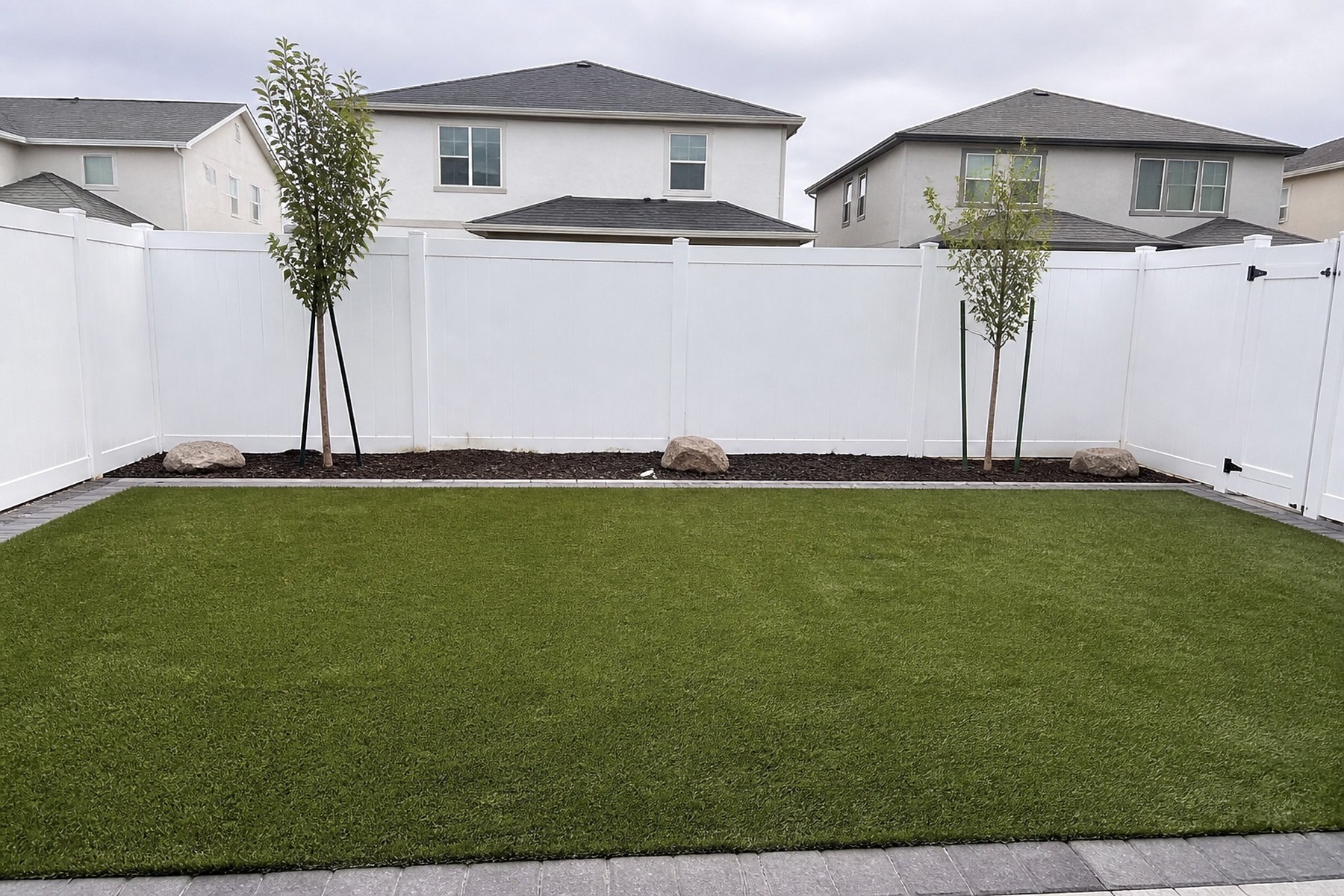
It's one of the first questions every Utah homeowner asks before committing to artificial turf: "Will it actually hold up?" Utah's climate is no joke — triple-digit summer heat, below-zero winter lows, intense high-altitude UV, and occasional heavy snowfall. It's a legitimate concern, and it deserves a straight answer backed by what we actually see in the field.
The short answer: professionally installed artificial turf lasts 15–20 years in Utah. Some installations we've seen are pushing past 20 years and still performing well. But that lifespan isn't guaranteed — it depends on the quality of the turf, the quality of the installation, how the turf is used, and whether basic maintenance is performed. Here's what you need to know.
Utah's Climate Challenges for Artificial Turf
Utah doesn't have an easy climate for any outdoor material. Understanding the specific stressors helps explain why turf quality and installation quality matter so much.
Extreme Summer Heat
Wasatch Front temperatures regularly hit 95–105°F from June through August. Turf surface temperatures can reach 140–160°F in direct afternoon sun — significantly hotter than the air temperature. This thermal stress affects the turf backing, infill, and blade structure over thousands of hours of cumulative exposure. Premium turf products are engineered to withstand this thermal cycling without degrading, backing separation, or excessive blade curl. Cheaper products show heat damage within 3–5 years.
Below-Zero Winters
Utah winters bring stretches of single-digit and below-zero temperatures, particularly in Davis County and the benches above the Salt Lake Valley. Turf blades become temporarily stiff in freezing temperatures — this is normal and doesn't damage the product. When temperatures rise, blades return to their natural position. The turf backing and drainage system must handle freeze-thaw cycling without cracking or delaminating, which is why proper base preparation with adequate drainage is non-negotiable.
High-Altitude UV Exposure
This is the factor most people underestimate. At Utah's elevation — 4,200 feet in the Salt Lake Valley up to 6,000+ feet in foothill communities like Draper and Alpine — UV radiation is 20–25% stronger than at sea level. Ultraviolet light is the primary degradation mechanism for synthetic materials. Without proper UV stabilization, turf fades, becomes brittle, and breaks down years faster than the manufacturer's warranty suggests.
Snow and Moisture
Utah's snow accumulation varies dramatically — from 20 inches annually in the valley to 60+ inches at higher elevations. Artificial turf handles snow without issue. Snow sits on top of the turf surface and melts normally. Turf actually warms up faster than natural grass, so snow melts faster on a turf lawn than on your neighbor's real grass. The key is not using metal shovels or sharp-edged snow blowers directly on the turf surface — a plastic shovel or leaf blower works fine for clearing light snow.
What Affects Turf Lifespan
Not all turf installations are created equal. Here are the factors that determine whether your turf lasts 10 years or 20+.
Turf Quality
The single biggest determinant of lifespan is the turf product itself. Key specifications to look for:
- Face weight: The weight of the turf fibers per square yard. Higher face weight (70+ oz) means denser, more durable turf that holds its shape longer. Budget products at 40–50 oz face weight flatten and thin out noticeably faster.
- UV stabilizers: As noted above, this is critical for Utah. Ask for UV exposure test ratings. Products rated for 3,000+ hours of UV exposure will maintain their color and structural integrity far longer at altitude.
- Blade material: Polyethylene is the standard for residential turf — soft, resilient, and durable. Nylon is the strongest but stiffest (best for putting greens and high-traffic commercial use). Polypropylene is the cheapest and least durable — avoid it for Utah installations.
- Backing quality: Dual-layer polyurethane backing is the gold standard. It provides the best dimensional stability, drainage, and resistance to UV degradation. Single-layer latex backing is cheaper but degrades faster, especially in high-heat environments.
Installation Quality
A premium turf product installed poorly will fail long before a mid-grade product installed correctly. Professional installation ensures:
- Proper excavation depth (3–4 inches of compacted base rock minimum)
- Correct grading for drainage — water must flow away from structures and not pool on the turf surface
- Compacted road base that won't settle or shift
- Weed barrier installation to prevent growth through the turf
- Proper seaming that won't separate over time
- Correct infill type and depth for the specific turf product
- Secure perimeter nailing and edging
Shortcuts in any of these areas show up within 1–3 years as wrinkles, drainage problems, visible seams, weed penetration, or uneven settling. We see these issues regularly on DIY and low-bid contractor installations that we're called in to fix or replace.
Usage and Traffic
How the turf is used affects how it ages. A decorative front yard with light foot traffic will look nearly new after 15 years. A backyard with daily use by kids and dogs will show more wear. High-traffic paths and play areas experience the most fiber matting and infill displacement. This is expected and manageable — it's one reason we recommend periodic brushing and infill top-ups for active-use areas.
Pet Considerations
Dogs are one of the most common reasons Utah homeowners install turf — no more mud, no more dead spots, no more brown patches. Turf holds up well to pet use, but proper planning is essential:
- Drainage rate: Pet-area turf needs a minimum drainage rate of 30 inches per hour to prevent odor buildup. All professional-grade turf products meet or exceed this.
- Infill choice: Zeolite-based infill is the best option for pet areas. Zeolite is a naturally occurring mineral that neutralizes ammonia — the compound responsible for urine odor. It's significantly more effective than standard silica sand for pet applications.
- Rinsing routine: Dedicated pet areas should be rinsed with a hose 1–2 times per week during warm months. This takes 5 minutes and prevents odor accumulation.
Maintenance That Extends Turf Lifespan
Artificial turf is marketed as "maintenance-free," and compared to real grass, it essentially is. But a small amount of basic care significantly extends the life and appearance of your installation:
- Brush fibers monthly: Use a stiff-bristled push broom (not metal) to brush turf fibers upright. This prevents matting in high-traffic areas and keeps the turf looking full and natural. Takes 10–15 minutes for an average yard.
- Rinse debris quarterly: A garden hose rinse removes dust, pollen, and small debris that accumulates on the turf surface. In dusty areas or near construction, rinse more frequently.
- Spot-clean pet areas weekly: Solid waste should be picked up promptly. Hose down pet areas regularly during warm weather.
- Clear leaves and organic matter: Don't let leaves sit on turf for extended periods. Organic matter traps moisture and can promote mold growth on the turf backing. A leaf blower makes quick work of this.
- Annual professional grooming: Once a year, consider a professional turf grooming that includes power brushing, infill inspection, and a deep clean. This is especially valuable for pet owners and high-traffic installations.
Signs Your Turf Needs Replacement vs. Repair
Not every issue means your turf needs to be ripped out. Here's how to tell the difference:
Repairable Issues
- Seams separating — can be reglued or retaped
- Localized matting in high-traffic areas — power brushing and infill top-up
- Small tears or pet damage — patch sections can be seamlessly installed
- Infill depletion — adding new infill restores performance
- Edge lifting — re-securing perimeter nails or edging
Signs It's Time for Replacement
- Widespread fading that makes the turf look washed out
- Blades becoming brittle and breaking off when touched
- Backing delaminating or crumbling
- Drainage failure that doesn't resolve with cleaning
- Significant thinning across the entire surface
The Math: Cost Per Year
When you calculate turf as a long-term investment, the numbers tell a compelling story.
Artificial turf: A typical $12,000 installation lasting 17 years costs $706 per year. Subtract a $1,800 water rebate, and your effective annual cost drops to $600 per year. Ongoing maintenance costs are essentially zero — maybe $50–$100 per year for occasional infill and a hose rinse.
Natural grass: Annual costs for maintaining a comparable area of real grass in Utah run $2,000–$3,300 per year when you factor in water ($600–$1,200), fertilizer and weed control ($200–$400), mowing ($1,200+ if hired), and other upkeep. Over 17 years, that's $34,000–$56,000.
Even at the most conservative estimates, artificial turf saves you $20,000+ over its lifespan compared to maintaining natural grass in Utah. And you get your weekends back.
Invest in Turf That's Built for Utah
The difference between turf that lasts 8 years and turf that lasts 20 years comes down to product quality and installation quality. At Sol Scapes, we install premium turf products with high face weights, advanced UV stabilizers rated for Utah's altitude, and polyurethane backing — all on a properly engineered base that drains correctly and won't settle.
Ready to see what professional turf installation looks like? Request a free quote or learn more about our artificial turf installation process. We serve homeowners across Davis, Salt Lake, and Utah Counties.
Questions? Call us at (801) 391-0906 or email dmckenzie@sol-scapes.com.